



March 23, 2022/United Capital Research
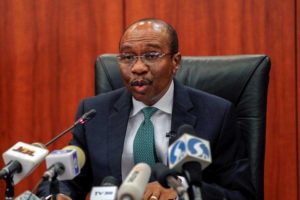
Yesterday, the Monetary Policy Committee (MPC) concluded its second meeting for 2022. The MPC held the Monetary Policy Rate (MPR) at 11.5%, Cash Reserve Ratio (CRR) at 27.5%, asymmetric corridor at +100/-700 basis point around the MPR, while Liquidity ratio was retained at 30.0%. Notably, the HOLD decision comes when monetary policy across the global economy trends toward a hawkish approach due to attempts to rein in on inflation, supply chain, and rising energy and food prices disruptions, domestically and globally.
The Committee believed that a tightening stance would not necessarily rein in inflationary pressures, as external factors and other structural constraints have mainly been responsible for recent and expected spikes. The MPC felt inflationary pressures could better be curtailed the sector would be addressing specific fiscal and legacy constraints. The Committee also believes that a tightening stance would halt the expansion in private sector credit. On the other hand, a loosen decision was realistically out of the question. A loosen decision would lead to additional inflationary pressures and increased FX speculation. The HOLD decision does not alter the economic activity trajectory as we continue growing credit growth in the private sector. The HOLD decision raises concerns considering the hiking cycle globally and potential capital flight. However, the CBN has continued to use unorthodox tools to attract foreign currency inflows through swaps with domestic commercial banks.
We note that this would leave a neutral effect on the fixed income environment, with the dynamics in that space likely to be driven by system liquidity mechanics than FGN’s appetite for debt capital. We also expect the CBN to continue to use unorthodox monetary policy tools to control the money supply, as hinted by the Chairman in the meeting. Lastly, we also indicate that the major constraints confronting the Nigerian macroeconomy are more related to the fiscal authorities than with the monetary policy interventions, as conventional monetary policy may be reaching its limit in this economic cycle.